

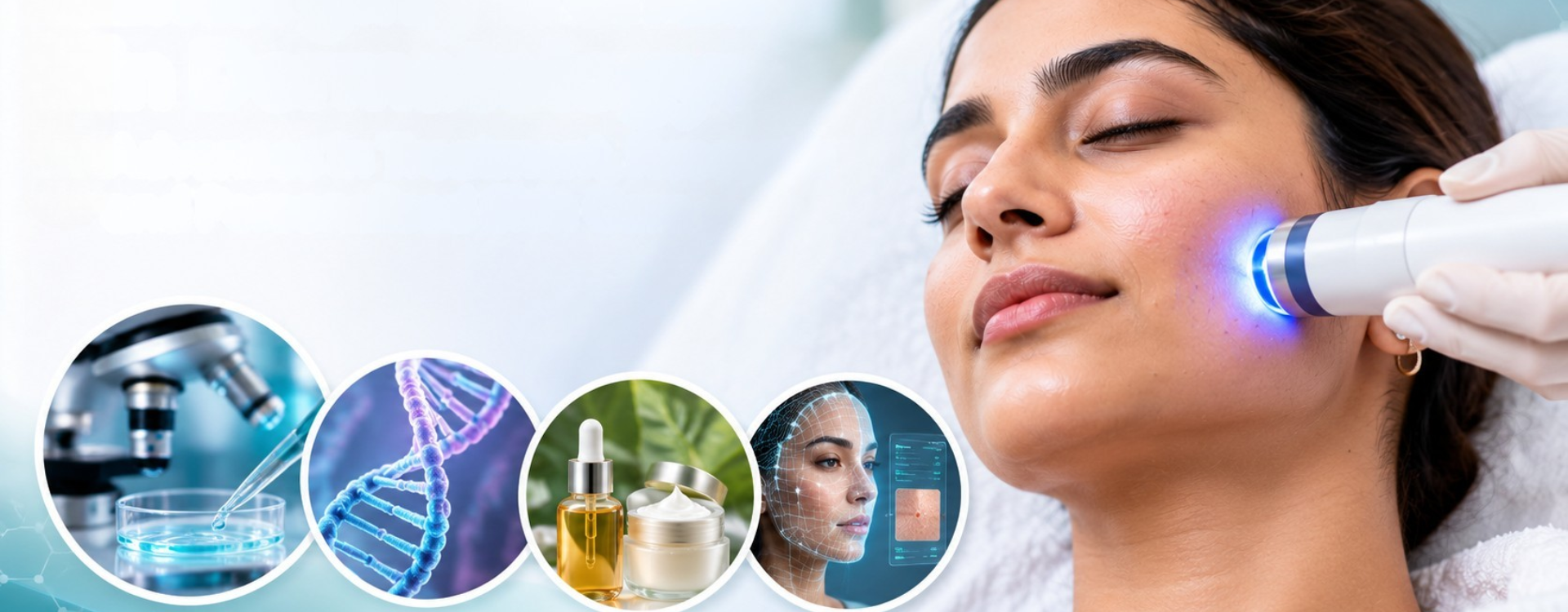
Emerging Trends in Dermatology: Advances in Treatment, Research and Personalised Skin Care
Dermatology is an evolving medical speciality shaped by advances in immunology, microbiology, pharmacology and digital technology. As the understanding of skin diseases continues to expand, research is increasingly focusing on the underlying biological mechanisms of dermatological conditions, improved treatment approaches and more individualised patient care.
Review articles play an important role in this progress by bringing together existing scientific evidence, evaluating treatment outcomes and identifying areas that require further investigation. A recent collection of dermatological research, comprising seven systematic reviews and twelve narrative literature reviews, highlights several important developments in contemporary dermatology. These include advances in managing difficult-to-treat skin conditions, the role of the microbiome, newer therapeutic approaches for vitiligo and alopecia, and the growing application of artificial intelligence in skin cancer diagnostics.
Together, these developments reflect the increasing complexity of dermatological research and the shift towards more targeted and integrated approaches to skin health.
1. Addressing Difficult-to-Treat Dermatological Conditions
Managing chronic inflammatory skin conditions can be particularly challenging in specific patient populations. Age, disease severity, anatomical location and treatment response can influence therapeutic outcomes.
Psoriasis in older adults
Managing psoriasis in individuals above 65 years presents distinct therapeutic and safety considerations. Real-world evidence indicates that although older patients may achieve treatment outcomes comparable to younger patients by 52 weeks, their initial response to IL-17 and IL-23 inhibitors tends to be slower.
Higher rates of treatment discontinuation due to adverse events have also been observed in this population.
The research discusses the proposed ‘Inflammatory Noise Floor’ hypothesis, which considers how cellular ageing, cellular senescence and immunosenescence may influence treatment response. Age-related immune changes, including alterations in T-cell function, may affect the skin’s ability to restore immune balance.
Atopic dermatitis in challenging anatomical areas
Atopic dermatitis affecting sensitive or difficult-to-treat areas, such as the head, neck, hands, genitalia and skin folds, presents additional management challenges.
Research reviewed in the collection highlights the effectiveness of Janus kinase (JAK) inhibitors, including abrocitinib, baricitinib and upadacitinib, in improving clinical severity and relieving persistent itching in these areas.
The reduction in itching is particularly important because it can help interrupt the chronic itch-scratch cycle and support restoration of the skin barrier.
However, inconsistent definitions of difficult-to-treat anatomical areas and differences in study designs make direct comparisons between individual treatments challenging.
2. The Growing Importance of the Skin and Gut Microbiome
The relationship between microbial communities and inflammatory skin conditions is an emerging area of dermatological research.
The gut–skin–exposome axis describes the complex interactions between the intestinal microbiome, skin physiology and environmental influences. Research suggests that imbalances in intestinal microbial communities may contribute to systemic and cutaneous inflammation, while environmental and skin-related factors may also influence gut microbial composition.
This relationship is being investigated across conditions such as psoriasis, atopic dermatitis, acne and systemic lupus erythematosus.
Microbiome alterations in skin conditions
Research on hidradenitis suppurativa has identified changes in the skin microbiome, including increased populations of staphylococci and anaerobic bacteria, reduced microbial diversity and depletion of beneficial microorganisms. These alterations may contribute to persistent inflammation.
Similarly, studies examining rosacea have identified associations between intestinal dysbiosis and cutaneous inflammation. Rifaximin therapy and probiotic supplementation have been proposed as potential approaches to modulating the gut microbiome.
Another emerging area involves the use of prebiotics, probiotics and postbiotics in topical dermatological formulations. Postbiotics are attracting particular interest because of their chemical stability, local tolerability and immunomodulatory properties.
Although this field continues to develop, microbiome research is expanding the understanding of inflammatory skin conditions beyond the skin itself.
3. Advances in Vitiligo Treatment: The Role of Phototherapy
Phototherapy remains an important component of vitiligo management, with research increasingly evaluating the effectiveness of different light-based treatment approaches.
Three systematic reviews in the collection examine the comparative effectiveness of phototherapeutic options.
Narrowband ultraviolet B (NB-UVB) demonstrates superior repigmentation outcomes compared with traditional psoralen plus UVA (PUVA) therapy. The reviewed evidence also highlights improvements in Vitiligo Area Scoring Index (VASI) scores, clinical response time and cosmetic colour matching.
For localised vitiligo, 308 nm monochromatic excimer lamps have demonstrated better repigmentation outcomes than conventional full-body NB-UVB, with efficacy comparable to the more expensive 308 nm excimer laser.
These findings highlight the importance of selecting phototherapy according to disease distribution and treatment requirements. However, differences in treatment protocols across studies mean that comparative outcomes should be interpreted cautiously.
4. Emerging Therapies in Hair Loss and Other Skin Conditions
JAK inhibitors in alopecia areata
Alopecia areata is an immune-mediated, non-scarring form of hair loss that can affect the scalp, eyebrows, eyelashes and body hair.
Ritlecitinib, an oral kinase inhibitor that selectively targets Janus kinase 3 (JAK3) and the TEC kinase family, has emerged as a promising treatment option for moderate-to-severe alopecia areata.
Evidence from clinical trials and real-world studies indicates meaningful hair regrowth across different patient populations, including adolescents and younger paediatric cohorts. Reported adverse effects are generally mild to moderate and include acne, folliculitis, upper respiratory tract infections, headaches and transient laboratory abnormalities.
Emerging approaches in lichen sclerosus
Lichen sclerosus is another condition receiving attention in dermatological research. A systematic review evaluating 31 randomised controlled trials involving 1,507 patients identified high-potency topical corticosteroids as the gold-standard treatment.
Other approaches, including CO2 and Nd laser therapies, platelet-rich plasma, topical calcineurin inhibitors and selected procedural interventions, have also demonstrated potential benefits.
However, variations in study protocols and risk of bias highlight the need for careful interpretation of the findings.
Topical metformin in dermatology
Metformin, traditionally used in the management of type 2 diabetes, is also being investigated for potential dermatological applications.
Its activation of AMP-activated protein kinase (AMPK) produces anti-inflammatory, antioxidant and lipid-modulating effects.
Emerging preclinical and early clinical evidence suggests potential applications in melasma, photoageing, wound healing, psoriasis, acne and hair loss. Topical formulations have generally demonstrated good local tolerability, although further research is needed to establish their clinical role.
5. Artificial Intelligence in Skin Cancer Diagnostics
Artificial intelligence is creating new possibilities in dermatological diagnostics, particularly through its integration with advanced imaging technologies.
Reflectance Confocal Microscopy (RCM) enables detailed, non-invasive visualisation of skin tissue at cellular resolution. However, conventional image interpretation can be time-consuming and subject to differences between observers.
Machine learning and deep learning techniques, particularly Convolutional Neural Networks (CNNs), are being explored to automate the identification and classification of cellular patterns in RCM images.
These technologies have the potential to improve diagnostic consistency, increase efficiency and support more informed clinical decision-making.
Research in this area reflects the growing role of digital technologies in supporting precision-oriented dermatological practice.
6. Lifestyle, Skin Ageing and the Importance of Skin Barrier Care
Dermatological health is influenced by factors beyond prescription-based treatments. Research is increasingly examining the relationship between nutrition, sleep, ageing and skin barrier function.
Skin ageing and barrier protection
Ageing leads to structural and functional changes in the skin barrier, including reduced natural moisturising factors and essential lipids. These changes increase transepidermal water loss and contribute to dryness, sensitivity, itching and reduced wound-healing capacity.
Evidence-based skincare approaches involving gentle cleansing, intensive moisturisation and topical barrier protectants can help maintain skin integrity and reduce complications such as skin tears, bruising, ulcers and pressure injuries.
Micronutrients and hair health
Research examining biotin (vitamin B7) supplementation in alopecia found insufficient evidence to support its routine use in individuals without a documented deficiency. Correcting established micronutrient deficiencies may, however, serve as a supportive component of comprehensive hair-loss management.
Sleep and skin health
Sleep quality is also emerging as an important consideration in inflammatory skin conditions. Sleep deprivation can disrupt collagen synthesis, cellular repair, wound healing and skin barrier function.
It is also associated with increased levels of inflammatory biomarkers, including interleukin-6 and tumour necrosis factor-alpha. The reviewed research explores melatonin and L-theanine as potential supportive interventions for improving sleep-related outcomes.
Conclusion
Dermatological research is increasingly moving towards an integrated approach that combines advances in immunology, microbiology, targeted therapies and digital technologies.
From newer treatment options for inflammatory skin conditions and advances in vitiligo phototherapy to microbiome research and AI-assisted diagnostics, these developments are expanding the possibilities for understanding and managing skin diseases.
At the same time, the growing focus on skin barrier health, nutrition and sleep highlights the importance of considering broader factors influencing dermatological outcomes.
Continued research and evaluation of emerging evidence will remain essential to translating scientific developments into effective, individualised approaches to dermatological care.