

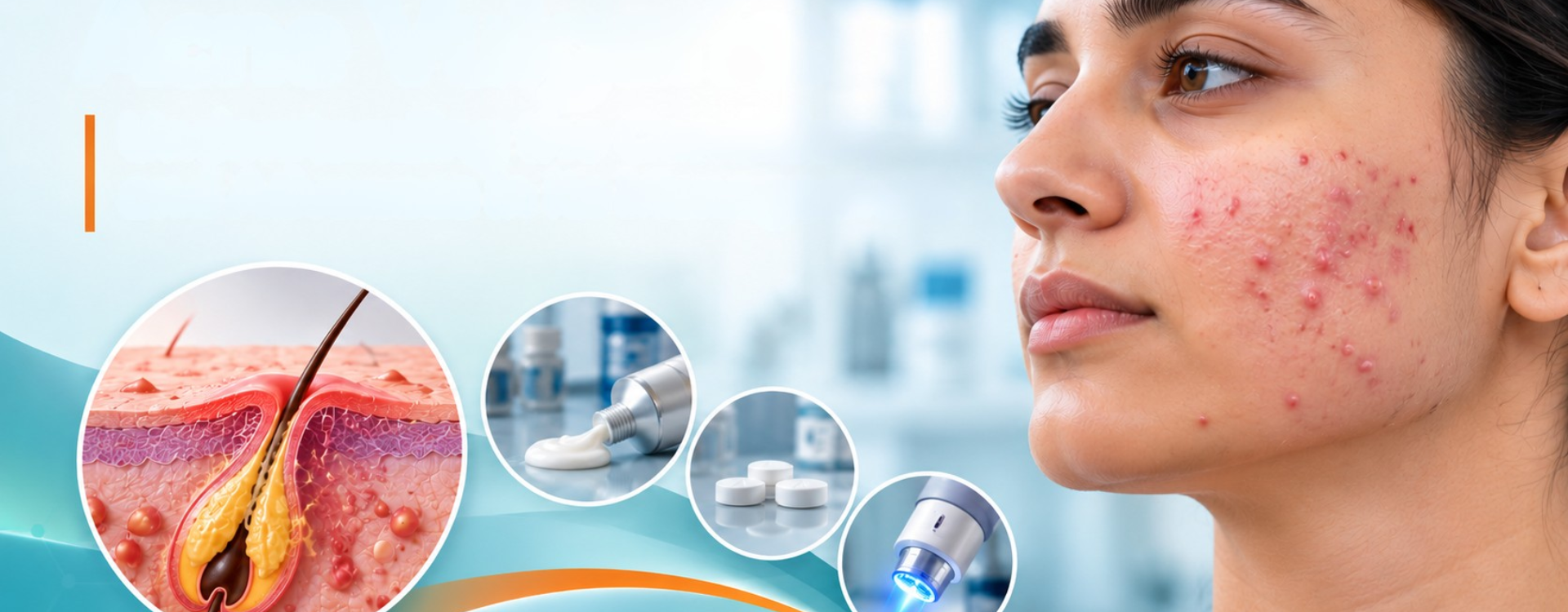
Acne Vulgaris: Understanding the Condition and Advances in Its Management
Acne vulgaris is one of the most common inflammatory skin conditions, affecting up to 85% of adolescents. Although commonly associated with adolescence, it can persist into adulthood, particularly in women. It is increasingly recognised as a chronic, relapsing condition that requires appropriate and sustained management.
Beyond its physical manifestations, acne can significantly affect an individual’s quality of life, emotional well-being and social functioning. Delayed or inadequate treatment can increase the risk of permanent scarring, post-inflammatory pigmentation and psychological distress. Early and effective intervention is therefore essential to minimise its long-term consequences.
Advances in understanding the underlying mechanisms of acne have shaped contemporary management approaches, with greater emphasis on combination therapies, responsible antibiotic use and individualised treatment.
Understanding the Pathogenesis of Acne
Acne develops through multiple interconnected processes involving the sebaceous glands, hair follicles and inflammatory pathways.
The key mechanisms include:
- Increased sebum production: Androgen-driven activity of the sebaceous glands increases sebum production.
- Abnormal follicular keratinisation: Changes in skin cell shedding cause keratin to accumulate within hair follicles, contributing to clogged pores.
- Bacterial-associated inflammation: Cutibacterium acnes contributes to the inflammatory processes associated with acne.
- Immune dysregulation: Altered innate and adaptive immune responses contribute to inflammation.
Genetic susceptibility has the strongest supporting evidence as a determinant of acne expression and severity. Other potentially modifiable factors, including dairy intake, high-glycaemic-load diets, stress, obesity and metabolic factors, may also influence acne, although the supporting evidence remains limited to moderate.
Clinical Presentation and Severity
Acne typically affects seborrhoeic areas, particularly the face, chest and back. Its lesions are broadly classified into two categories:
Non-inflammatory lesions
- Open comedones (blackheads).
- Closed comedones (whiteheads).
Inflammatory lesions
- Papules.
- Pustules.
- Nodules.
- Cysts.
Acne severity is broadly classified as:
- Mild: Limited open and closed comedones with a few inflammatory lesions.
- Moderate: More extensive comedones, numerous papules and pustules, and limited nodules.
- Severe: Conglobate acne, extensive truncal involvement, scarring or significant psychosocial impact.
The presence of comedones is an important clinical feature in distinguishing acne vulgaris from other skin conditions.
Beyond Skin Lesions: Scarring and Psychological Impact
Acne can have lasting physical and psychological consequences, particularly when inflammation remains uncontrolled.
Scarring and pigmentation
Acne may result in atrophic scars, hypertrophic scars or keloids. Scarring risk is associated with disease severity, delayed treatment and behaviours such as picking and excoriating lesions.
Post-inflammatory dyspigmentation may also occur and can be more prominent and persistent in individuals with darker skin phototypes.
Psychological impact
Research demonstrates consistent associations between acne and depression, anxiety and suicidality. Its psychological burden is not always proportional to the number of visible lesions. Even individuals with relatively few lesions may experience considerable emotional distress, body image concerns and social difficulties.
These findings highlight the importance of early treatment and assessing the psychological impact of acne as part of its overall management.
Diagnosis and Clinical Assessment
An appropriate clinical assessment is essential for determining acne severity and selecting a suitable treatment approach.
Assessment should consider the type and severity of lesions, duration of the condition, previous treatments, treatment response, scarring and psychological impact.
It is also important to distinguish acne vulgaris from conditions with similar presentations, including rosacea, periorificial dermatitis, hidradenitis suppurativa, folliculitis and acneiform drug eruptions.
Certain medications, including systemic corticosteroids, testosterone, anabolic steroids, lithium, some antiepileptics, vitamin B12, Janus kinase inhibitors and selected targeted cancer therapies, may cause acne or acne-like eruptions.
A sudden onset, uniform lesion appearance, absence of comedones or unusual distribution may suggest a drug-induced acneiform eruption.
Polycystic ovary syndrome (PCOS) is another important consideration, particularly in women presenting with acne alongside menstrual irregularities, hirsutism, infertility or other features of androgen excess. Further clinical and endocrine assessment may be warranted in such cases.
Contemporary Approaches to Acne Management
The primary goals of acne management are to reduce active lesions, prevent scarring and pigmentation, and improve quality of life.
Treatment should be individualised according to disease severity and skin type. Current approaches favour combination therapies that address multiple underlying mechanisms rather than relying on a single treatment.
1. Topical Therapies: The Foundation of Acne Management
Topical treatments are the first-line approach for most mild acne cases and remain important in managing moderate acne and preventing recurrence.
Topical retinoids
Adapalene, tretinoin, tazarotene and trifarotene are central to acne management. They reduce microcomedone formation, regulate follicular keratinisation and address inflammation. They may also improve acne-related pigmentation and early textural changes over time.
Adapalene has favourable tolerability for long-term acne control, while tretinoin and trifarotene have supporting data for improving acne-related hyperpigmentation and early scarring.
Retinoids should be introduced gradually to minimise irritation. Regular moisturiser and sunscreen use can also improve tolerability.
Benzoyl peroxide
Benzoyl peroxide has antibacterial and anti-inflammatory properties. It is commonly used in combination with topical retinoids or antibiotics to improve treatment effectiveness. Patients should be counselled about possible skin irritation and its potential to bleach fabrics and hair.
Topical antibiotics
Clindamycin and erythromycin are used in acne management. However, prolonged use or application as monotherapy can contribute to antibiotic resistance.
When prescribed, topical antibiotics should be combined with benzoyl peroxide or a retinoid and used for a limited duration, generally up to 12 weeks.
Other topical options
Azelaic acid and salicylic acid may be considered as alternatives or adjuncts in selected patients, including those who cannot tolerate retinoids. They can also help address post-inflammatory pigmentation.
Clascoterone, a topical androgen receptor inhibitor, is another option discussed in the clinical update. Clinical trials have demonstrated modest improvements in inflammatory and non-inflammatory acne lesions.
Maintenance therapy
Maintenance is important for reducing recurrence after active lesions improve. Topical retinoids, with or without benzoyl peroxide, are recommended for most patients. Continued topical antibiotic use is not recommended.
2. Oral Antibiotics and Antimicrobial Stewardship
Oral antibiotics may be useful for short-term management of moderate-to-severe inflammatory acne when topical treatments alone do not provide adequate control.
However, prolonged or repeated courses increase the risk of antimicrobial resistance. Contemporary management therefore emphasises responsible antibiotic use.
Key principles include:
- Limiting oral antibiotic treatment, generally to no more than three months.
- Combining antibiotics with non-antibiotic topical treatments such as retinoids or benzoyl peroxide.
- Avoiding concurrent topical antibiotic use.
- Discontinuing antibiotics once inflammation is controlled.
Tetracyclines, including doxycycline and minocycline, are identified as first-line oral antibiotic options. Potential adverse effects include gastrointestinal symptoms, photosensitivity and, in some cases, intracranial hypertension. Minocycline may also cause uncommon but serious reactions, including drug-induced lupus and autoimmune hepatitis.
When acne does not respond adequately or returns after antibiotic treatment, clinicians should reassess the diagnosis, adherence and contributing factors rather than repeatedly prescribing antibiotics. Hormonal therapy or isotretinoin may be considered as alternatives in appropriate patients.
3. Hormonal Therapies for Persistent Acne
Hormonal treatment is an important option for women experiencing persistent or hormonally influenced acne.
Combined oral contraceptives and spironolactone can reduce androgen-mediated sebum production. They may be particularly useful in women with late-onset acne, jawline involvement or premenstrual flares.
Spironolactone
Spironolactone is an oral aldosterone antagonist with anti-androgenic properties. Clinical trials have demonstrated improvements in acne outcomes among women, making it an alternative to repeated antibiotic courses.
It is commonly used alongside topical treatments and may also be combined with an oral contraceptive.
Potential adverse effects include menstrual irregularities, breast tenderness, fatigue and increased urination. Monitoring renal function and electrolytes may be considered depending on individual risk factors.
Spironolactone is contraindicated during pregnancy because of the potential risk of feminisation of a male fetus. Effective contraception is therefore important for patients of childbearing potential.
4. Oral Isotretinoin for Severe and Treatment-resistant Acne
Oral isotretinoin is considered the most effective disease-modifying treatment for acne.
It may be indicated for severe nodular or conglobate acne, scarring acne, widespread comedonal acne, substantial psychosocial morbidity or acne that persists despite appropriate topical and systemic treatments.
Isotretinoin requires careful assessment and medical supervision.
Common adverse effects
These include cheilitis (inflammation of the lips), dry skin, photosensitivity and temporary increases in lipid levels.
Pregnancy prevention
Isotretinoin is teratogenic and can cause severe birth defects. Pregnancy must be excluded before treatment and avoided during treatment and for at least one month after discontinuation. Effective contraception and regular counselling are essential.
Mental health and sexual adverse effects
Safety updates published by Australia’s Therapeutic Goods Administration in 2025 highlighted reports of psychiatric and sexual adverse events associated with isotretinoin.
Although large observational studies and meta-analyses have not demonstrated a consistent causal association with psychiatric disorders or suicide, individual vulnerability and rare reactions remain important considerations.
Patients should be counselled about potential mood changes, depression, psychotic behaviours and suicidal thoughts. Baseline mental health assessment and ongoing monitoring are recommended.
Reports of possible sexual adverse effects include decreased libido, erectile dysfunction and vulvovaginal dryness. Patients should be encouraged to report changes in sexual function or comfort during treatment.
The clinical update also recommends baseline lipid profile and liver function tests, followed by monitoring according to individual risk factors.
Light, Laser and Physical Therapies
Light-based and physical procedures may be used as adjuncts to conventional pharmaceutical acne treatments. These approaches target different mechanisms involved in acne development, including bacterial activity, sebaceous gland function, follicular keratinisation and inflammation.
Light and laser-based therapies
Available options include blue and red light devices, intense pulsed light and infrared lasers.
Evidence suggests modest-to-moderate improvements, particularly in inflammatory acne lesions. However, these approaches are considered adjuncts rather than replacements for established medical treatments.
Recent reviews and consensus statements also indicate that light- and laser-based treatments can be performed safely during or shortly after isotretinoin therapy without an increased risk of adverse scarring or delayed healing.
Photodynamic therapy
Photodynamic therapy involves applying a photosensitising agent, such as 5-aminolevulinic acid or methyl aminolevulinate, followed by activation using visible light.
This process can selectively damage sebaceous glands and reduce Cutibacterium acnes. It may be useful in moderate-to-severe or treatment-resistant acne, although post-treatment redness can occur.
Comedone extraction and chemical peels
Comedone extraction involves the manual removal of open and closed comedones. It can provide immediate clinical improvement and may be useful in non-inflammatory comedonal acne. The procedure should only be performed by appropriately trained clinicians.
Chemical peels using agents such as salicylic acid and glycolic acid promote exfoliation, reduce follicular blockage and improve post-inflammatory hyperpigmentation.
When Should a Dermatologist Be Consulted?
Dermatological assessment is particularly important in severe, persistent or treatment-resistant acne.
Referral or specialist advice should be considered when:
- Severe nodulocystic acne or acne fulminans is suspected.
- Rapid scarring is occurring.
- Extensive comedonal acne is present.
- There is inadequate response to two appropriate treatment regimens.
- Isotretinoin is being considered.
- The diagnosis is uncertain or another skin condition is suspected.
- Acne is associated with suspected endocrine disorders.
- Significant psychological distress, body image concerns or suicidality are present.
Early specialist involvement can help ensure appropriate treatment selection, monitoring and continuity of care.
Conclusion
Acne vulgaris is a chronic inflammatory skin condition that requires more than symptomatic treatment. Its management involves addressing multiple underlying mechanisms while considering the physical, emotional and long-term consequences of the disease.
Contemporary approaches emphasise early combination topical therapy, responsible antibiotic use, hormonal treatments for women with persistent acne and appropriate access to isotretinoin with strengthened safety monitoring.
Light-based and physical procedures may also provide additional benefits in selected patients.
Ultimately, individualised treatment, patient education and timely dermatological intervention remain central to reducing the long-term physical and psychological impact of acne.
Reference